
Research & Guides
TB-500 vs Thymosin Beta-4: Full-Length Peptide or Fragment?
October 26, 2026
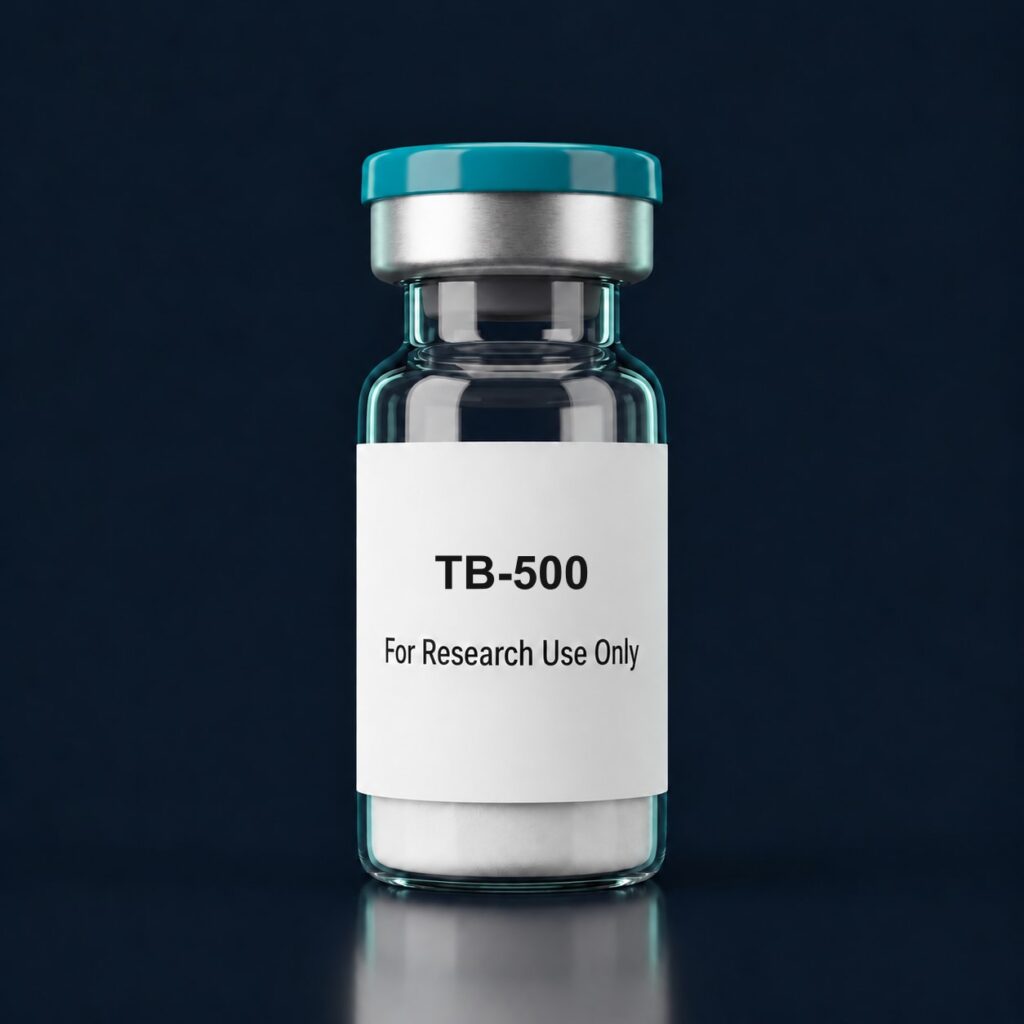
Evidence and catalog checked: October 26, 2026.
Search for TB-500 and thymosin beta-4 and the names can appear to describe exactly the same thing. Then a listing adds “fragment 17–23,” and the comparison becomes less obvious. The distinction matters because a study of a full-length peptide is not automatically a study of one of its short fragments.
There is a useful opportunity here: clearer identity makes the research easier to follow. Rather than asking whether a familiar name is “good,” start by asking what molecule that name describes in the source you are reading.
Full-length thymosin beta-4 and a short fragment
Thymosin beta-4 is a 43-amino-acid peptide. A fragment designated 17–23 refers to a seven-amino-acid section of that longer sequence. A fragment can be scientifically interesting in its own right, but it is a different material from the full-length peptide.
A 2012 analytical study by Esposito and colleagues identified an N-terminally acetylated 17–23 fragment in a product called TB-500. This establishes what those investigators found in that product; it does not prove the identity of every current listing sold under the same name.
That last distinction is important. TB-500 is a name encountered in product discussions, but a common name is not a substitute for a documented sequence. If two suppliers use it differently, the shared wording does not make the materials equivalent.
| Term | What it tells you | What still needs checking |
|---|---|---|
| Thymosin beta-4 | Reference to the full-length peptide | Exact material, chemical form and documentation |
| Fragment 17–23 | A short section of the parent sequence | Sequence and terminal modifications |
| TB-500 | A commonly used product or discussion name | Whether the source means full length, a fragment or another specification |
Why the distinction changes how you read research
A result belongs to the material actually studied. If a publication identifies thymosin beta-4 in a particular formulation, it should be described that way. Replacing that name with TB-500 in a summary may introduce an assumption the original investigators did not make.
For example, a 2015 randomized phase II study examined a thymosin beta-4 ophthalmic formulation called RGN-259 in dry-eye disease. That is human clinical research involving a particular eye-drop product. It is not a trial showing that an unspecified TB-500 research vial repairs a tendon or produces a whole-body recovery effect.
The distinction does not make the original work uninteresting. It makes the actual question visible: investigators were studying a defined formulation, in a defined condition, with outcomes related to that condition. The more accurately the experiment is described, the more useful it becomes to a reader comparing evidence.
Do results for one material prove results for the other?
No automatic transfer is justified. Shared sequence ancestry can explain why researchers consider a fragment worth investigating. It cannot replace an experiment that directly tests the fragment and the outcome being claimed.
Nor does a promising result in a cell system necessarily establish a patient benefit. A good comparison identifies the experimental model, the test material and the endpoint together. Leaving out any of those details can make very different studies look like a single body of interchangeable evidence.
Our view is that the strongest discussions of this category will become more specific over time. Full-length and fragment studies can each be useful, but keeping them separate helps readers recognize a real advance rather than counting every related paper as confirmation of the same claim.
How these names appear in our catalog
ChinaPeptideshop currently has separate entries for TB-500, thymosin beta-4 acetate and TB-500 fragment 17–23. Their existence as separate entries should not be taken as proof of a universal naming convention across the industry.
For a specific catalog item, read the stated specification and request clarification if the sequence or chemical form is not established by the available records. We do not infer a batch’s molecular identity from a study about a similarly named product. The COA page provides a place to locate published batch records; their scope and connection to a specific item still matter.
Our HPLC versus mass spectrometry guide also explains why a chromatographic percentage and an identity assessment are different questions. A specification becomes more useful when it is supported by the appropriate analytical evidence.
The FDA safety page specifically identifies thymosin beta-4 fragment LKKTETQ, also called TB-500, and notes insufficient human safety information and potential immunogenicity concerns. This statement concerns that identified fragment; it should not be silently expanded to every material using a similar name.
A better way to compare the category
Look for a complete chain: the name on the listing, the documented material, the material in the paper, and the outcome measured. When those points line up, the discussion is more meaningful. When they do not, the gap is something to clarify rather than fill with a broad recovery promise.
These catalog entries are research materials, not established treatment recommendations. The real opportunity is to build a more precise understanding of a peptide family with several different research directions—and to make future findings easier to interpret when they arrive.