
Research & Guides
SS-31, Elamipretide and Forzinity: What the FDA Approval Means
October 26, 2026
Evidence and catalog checked: October 26, 2026.
SS-31 is one of the more interesting names in mitochondrial research because its story reaches beyond a laboratory hypothesis. A medicine containing elamipretide has received FDA approval for a specific rare disease. That is a real development worth understanding precisely.
The distinction is this: SS-31 is a research name associated with elamipretide; Forzinity is the approved prescription medicine. Those names are connected, but a research catalog listing and an approved finished drug are not interchangeable.
One research lineage, different kinds of names
Published research uses several names for elamipretide, including SS-31, MTP-131 and Bendavia. For example, a 2019 study involving failing human-heart tissue explicitly identifies these earlier names. Recognizing the aliases makes it easier to follow the literature without mistaking each development code for a separate discovery.
Forzinity is different in kind: it is a brand name attached to a specific prescription product. A branded medicine includes a defined formulation, manufacturing controls, approved labeling and a regulatory record. Recognizing a shared active-molecule lineage does not establish that another material has those same characteristics.
| Name | How it appears | Useful interpretation |
|---|---|---|
| SS-31 | Research literature and reagent catalogs | A name to connect with the relevant scientific record |
| Elamipretide | Scientific publications and drug documentation | The active-molecule name |
| Forzinity | FDA-approved prescription product | A specific finished medicine with a defined indication |
Why the mitochondrial angle is interesting
Mitochondria are often discussed as cellular energy producers. SS-31 research has focused on the mitochondrial membrane and cardiolipin, a lipid involved in that membrane’s organization and function. This is a more specific line of investigation than a general claim that something “boosts energy.”
In Birk and colleagues’ 2014 experimental paper, SS-31 interacted with cardiolipin-containing systems and affected processes associated with mitochondrial electron transport. The experiments help explain the research rationale; they are not a demonstration that a healthy person will feel more energetic after using a catalog product.
Our editorial view is that this specificity is the interesting part. A clearly described biological target gives researchers a testable question. It is more informative than an expansive wellness claim because readers can follow how a proposed mechanism is examined and where the next evidence gap remains.
What FDA approved, and when
On September 19, 2025, FDA granted accelerated approval to Forzinity for improving muscle strength in adults and children with Barth syndrome weighing at least 30 kilograms. This was a specific rare-disease decision, not a general approval for anti-aging, exercise performance or everyday fatigue. The date is historical context, not breaking news today. See the FDA announcement.
The prescribing information explains that accelerated approval was based on improvement in knee-extensor strength, an intermediate clinical endpoint. Continued approval may depend on confirmatory evidence of clinical benefit. The label also identifies important safety information, including hypersensitivity, benzyl-alcohol toxicity in neonates and injection-site reactions.
FDA’s trial snapshot describes a small Barth syndrome study population. That population matters: a finding in a genetically defined disease cannot automatically be transferred to healthy adults or unrelated conditions.
How to read a new SS-31 headline
Start by identifying what the headline is about. Is it an experiment on isolated mitochondria, an investigation using human tissue, a clinical trial, or an action concerning a finished medicine? All can be valuable, but they answer different questions.
Then read the outcome. A change in an energy-related laboratory measure is different from a patient reporting less fatigue, and both differ from an objectively measured change in muscle strength. Keeping the endpoint visible prevents a narrow result from quietly turning into an all-purpose benefit claim.
Finally, check the date and the exact material. An old mechanism paper may explain why a program began, while a later regulatory document explains what a medicine is authorized to do. They belong in the same story without replacing one another.
Where the ChinaPeptideshop SS-31 listing fits
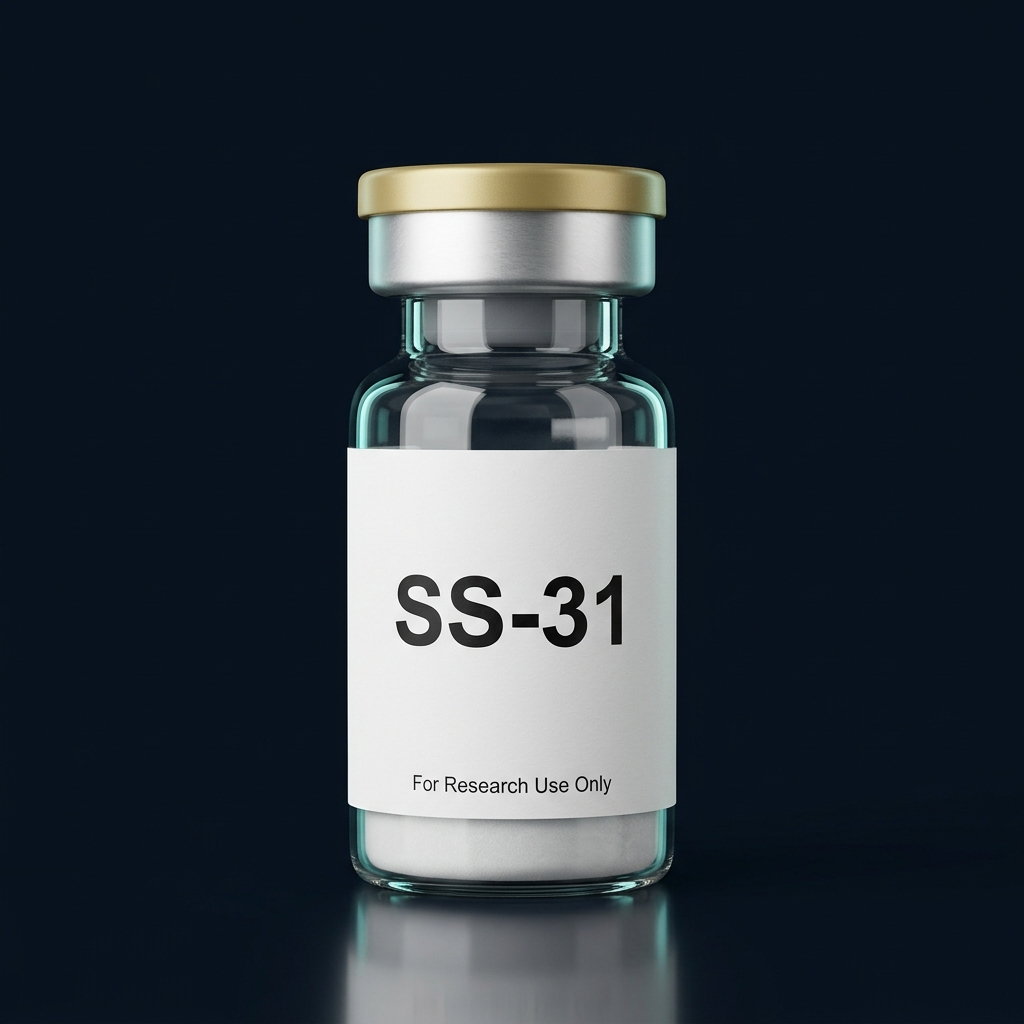
The SS-31 catalog page is a research-material listing. It is not Forzinity, and its presence in the catalog does not transfer FDA approval, a clinical formulation or a demonstrated treatment effect to that item. Product specifications and any available batch documentation should be considered on their own terms.
The positive industry signal is the progress from a specific mitochondrial research question to a narrowly defined medicine. Following that development accurately makes the field more interesting, not less: the value lies in seeing which ideas earn stronger evidence and what they may help researchers investigate next.