
研究与指南
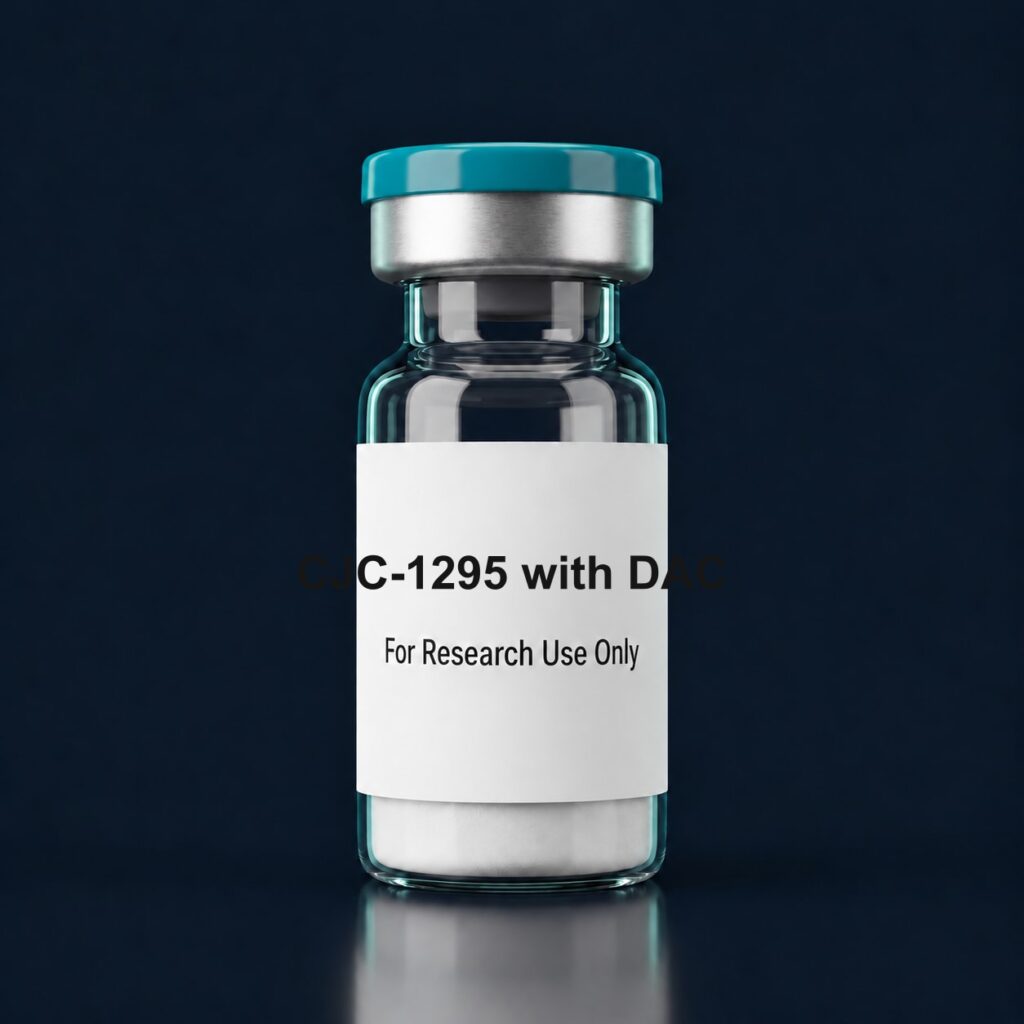
CJC-1295 With DAC vs Without DAC: Why the Difference Matters
26 10 月, 2026
本文为英文原文。Read the English original
Evidence and catalog checked: October 26, 2026.
Two listings can both say CJC-1295 and still describe different research materials. The important part is often the smallest phrase on the page: with DAC 或 without DAC. That distinction changes which scientific papers are relevant and what conclusions can reasonably be drawn from them.
Our view is simple: a useful comparison starts with identity, before anyone compares outcomes. Treating every CJC-1295 reference as interchangeable makes an already confusing category harder to understand.
The short answer: DAC is a structural distinction
DAC refers to a drug affinity complex, a modification associated with albumin binding and prolonged exposure. It is part of the compound’s design, rather than a separate ingredient that can be ignored when reading a study. Products described as CJC-1295 without DAC should therefore be evaluated separately from the long-acting DAC material.
FDA’s December 4, 2024 scientific presentation distinguished several CJC-1295-related substances and highlighted inconsistencies in common names. The practical lesson is valuable even outside a regulatory discussion: the familiar name alone may not establish the exact chemical structure.
| Listing | What to establish first | What not to assume |
|---|---|---|
| CJC-1295 with DAC | DAC modification and documented identity | That every CJC-1295 study used an identical material |
| CJC-1295 without DAC | Sequence, modifications and supporting documentation | That the long-acting DAC trial findings apply unchanged |
| CJC-1295 plus Ipamorelin | Which CJC form is included and how each ingredient is specified | That a combination has been validated by studies of either ingredient alone |
What the frequently cited human research actually measured
A 2006 study by Teichman and colleagues examined a long-acting CJC-1295 analog in healthy adults, using randomized, placebo-controlled trials. It measured growth hormone and IGF-I responses, pharmacokinetics and safety. It did not establish that any product carrying a similar retail name produces a particular physique, recovery or anti-aging outcome.
Another 2006 paper by Ionescu and Frohman investigated growth-hormone secretion patterns with an albumin-binding CJC-1295 analog. These are useful pieces of endocrine research, but their scope is narrower than the claims sometimes attached to them online.
The question worth asking is not simply whether a paper mentions CJC-1295. Ask whether it studied the same molecular form, in the same type of population, and measured the outcome being discussed. A hormone measurement and a long-term clinical benefit are different endpoints.
Where Ipamorelin fits into the comparison
Ipamorelin is a separate peptide, not another name for CJC-1295. The original 1998 pharmacology paper by Raun and colleagues investigated it as a selective growth hormone secretagogue in preclinical experiments, including cell and animal models. That work provides a basis for understanding why the two names appear in the same research conversation; it does not validate every commercial combination.
Putting two ingredients into one listing creates a new specification question. A reader needs to know the identity of each ingredient and whether the advertised amount describes the whole blend or individual components. A blend title, by itself, is not evidence of synergy, superiority or a proven human outcome.
Compare the catalog entries without mixing up the evidence
ChinaPeptideshop lists CJC-1295 with DAC, CJC-1295 without DAC, 伊帕瑞林 and a CJC-1295 without DAC plus Ipamorelin listing as separate catalog entries. Keeping those names separate helps readers find the relevant specification rather than treating the category as one interchangeable product.
For documentation, match the product name and batch information with the available COA records. An analytical report must be read within its stated scope; a purity result does not establish a clinical benefit or prove equivalence to the material in a publication. Our HPLC 和质谱指南 explains why those methods answer different questions.
A concise safety and evidence boundary
的 FDA safety page identifies concerns involving CJC-1295 and Ipamorelin, including limited clinical safety information and characterization or immunogenicity issues. Research catalog entries are not instructions for personal hormone treatment.
The comparison that is actually useful
“Which is better?” is too broad to be a meaningful scientific question. “Which material was studied, and what was measured?” is much more useful. Accurate names let readers follow the evidence, compare like with like and spot a claim that has drifted beyond its source. That is the strongest starting point for this category.